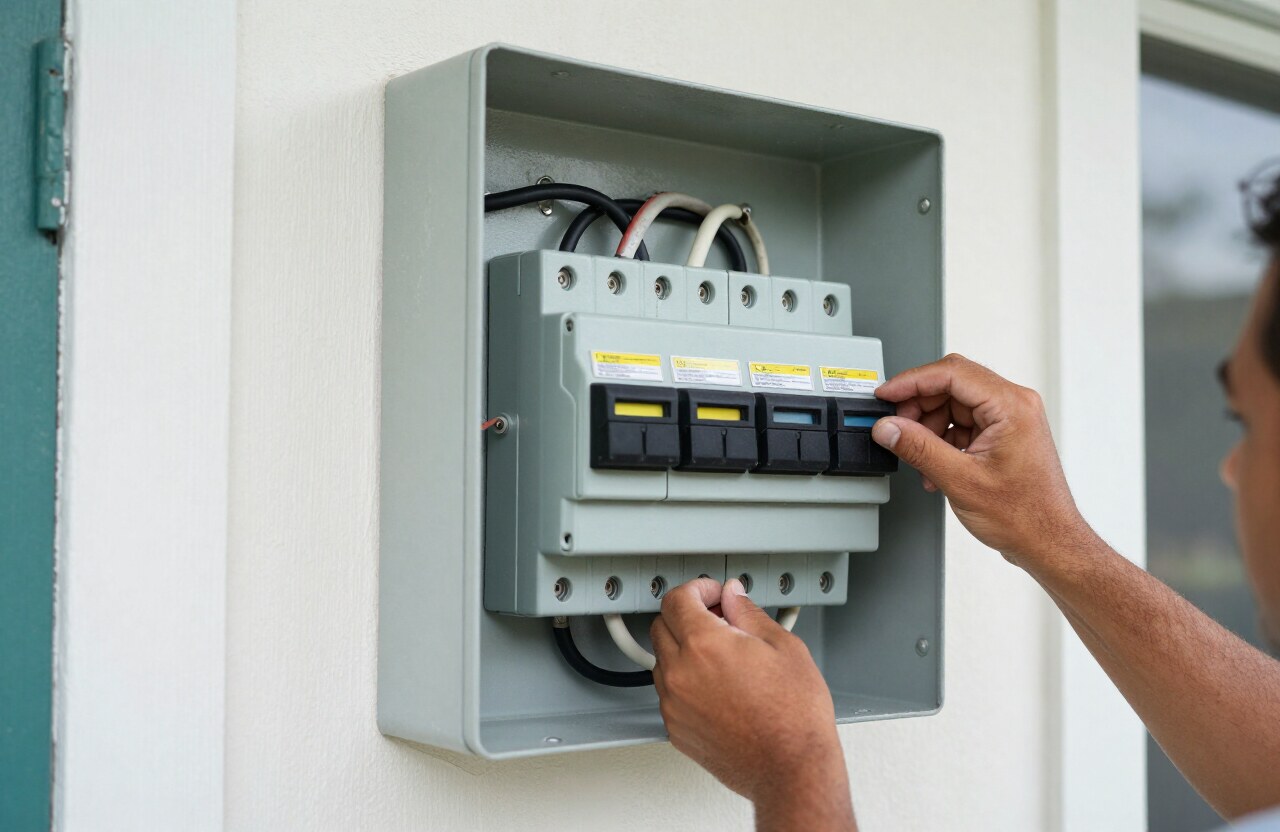
A home standby generator is a fixed unit wired directly into your electrical panel. When grid power fails, an automatic transfer switch disconnects your house from BPL, starts the generator, and restores power to your circuits — usually within ten seconds. When the grid returns, it reverses the process and shuts the generator down. You never touch it.
What a complete standby system includes
Homeowners often price only the generator itself, then get surprised at quote time. A proper whole-home standby system in New Providence is made of three connected parts, and all three matter for reliability in island conditions.
- The generator. An air-cooled unit (typically 22–26 kW) for most homes, or a liquid-cooled unit (30–48 kW+) for large western homes running multiple A/C units. We specify corrosion-resistant, aluminum enclosures suited to salt air.
- The automatic transfer switch (ATS). The brain of the system. It senses the outage, isolates your home from the grid so line workers stay safe, and switches to generator power automatically — critical for absentee and second-home owners.
- The fuel supply. Usually LP (propane) tanks or, for larger loads, a diesel tank. Fuel choice affects run time, refueling logistics and how the unit handles long BPL load-shedding stretches.
The installation process, step by step
Every install starts with a site visit — not a remote estimate — because the pad location, panel condition and fuel routing decide the real cost.
- Site assessment. We inspect your panel, measure your loads, and choose a code-compliant location for the unit and fuel supply.
- Sizing. We calculate starting and running watts so the generator carries your real load — see our generator sizing guide.
- Pad and set. We pour or set a level concrete pad, then anchor the generator with hurricane-rated tie-downs.
- Electrical and fuel. We install the transfer switch, run conduit to your panel, and connect the LP or diesel supply.
- Inspection and commissioning. We arrange electrical inspection, then load-test the system and walk you through it.
Concrete pad and hurricane tie-down requirements
In the Bahamas, wind loading is not optional. A standby generator must sit on a level, reinforced concrete pad and be mechanically anchored so it does not shift or become a projectile in a storm. We size the pad to the unit, keep it above expected flood level where possible, and use anchors rated for hurricane-force wind. A generator that survives the outage but not the storm is no protection at all.
Permitting and electrical inspection in the Bahamas
A standby generator ties into your home's main electrical service, so the work must be done to code and inspected. We handle the electrical permitting and coordinate inspection so the transfer switch and bonding are signed off correctly. This matters for insurance and for resale — an uninspected, improvised hookup is a liability, not an upgrade.
LP vs diesel for island conditions
Fuel choice is one of the biggest decisions, and the right answer depends on your load and how the property is used.
| Factor | LP (Propane) | Diesel |
|---|---|---|
| Best for | Most homes up to ~30 kW | Large homes & commercial loads |
| Fuel storage | Clean, long shelf life | Needs treatment; can gel/spoil |
| Salt-air handling | No fuel degradation | Tank & lines need maintenance |
| Refueling | Bottle/tank delivery | Bulk delivery for long runs |
| Run time | Depends on tank size | Long, with a large tank |
For most Nassau homes, LP is clean and low-maintenance and does not degrade sitting between outages — a real advantage for second-home owners. Diesel makes sense for large loads and longer autonomy, provided the fuel is kept fresh and the system is serviced.
Why automatic transfer matters for absentee owners
If you split time between New Providence and abroad, a manual generator is nearly useless — it only works when someone is home to start it. An automatic transfer switch, paired with remote monitoring, means your home keeps its A/C dehumidifying, its fridge cold and its security system live whether you are on the island or overseas. Add a local service contact and your property is genuinely protected year-round, not just when you visit.
Typical timeline
After the site visit, most residential installs are scheduled within a couple of weeks once the equipment is on-island and cleared, and the on-site work usually takes one to three days depending on trenching and fuel routing. Because equipment is shipped in and cleared through customs, planning ahead of hurricane season (June–November) is the safest way to avoid the rush. Request a quote online to start with a free site visit and sizing assessment.